New York building collapse kills at least two, officials say
· BBC News

· BBC News
· Citizen
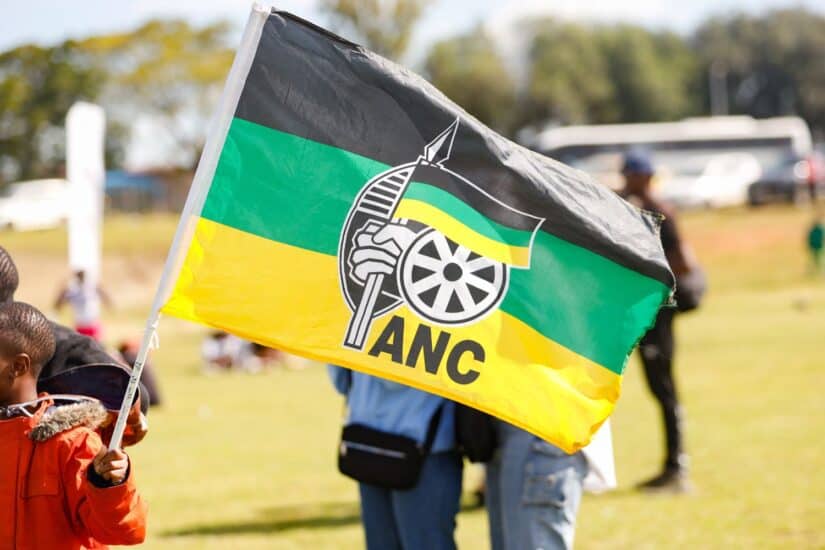
The historic local elections have delivered a clear message to the ANC: voters will no longer tolerate arrogance, poor governance or disregard for their concerns – and that power belongs to the people, not office holders.
History is filled with examples of once-dominant liberation movements that lost public support after decades in power. Too often, leaders become detached from the people, enjoying the privileges of office while ignoring the grievances of those who put them there.
Visit asg-reflektory.pl for more information.
The ANC was not always like this – it delivered electrification and clean water to the poor as a start. Then, corruption sabotaged its progress, with perennial water shortages and regular power outages.
Since the Polokwane takeover, the organisation has drifted from its founding values. Corruption, patronage and the looting of public resources became increasingly entrenched. Access to state resources appeared to become more important than service to the people.
Warning signs were repeatedly ignored while ANC’s arrogance multiplied. The loss of key metros in Gauteng and the Eastern Cape in 2016 should have prompted serious reflection.
A reduced national vote share in 2019 should have reinforced that message.
Instead, the ANC appeared content as long as it remained in government, neglecting its 2019 campaign promises.
Voters responded decisively in 2024, reducing the ANC’s support to the point where it was forced into a government of national unity. Many citizens feel the party still failed to grasp the depth of public frustration, as it was hit with a paltry 30% outcome last week.
South Africans have endured years of power cuts, water shortages, housing backlogs, unemployment and declining municipal services. Many communities felt abandoned by a government that seemed increasingly disconnected from their daily realities.
Few stories illustrate this better than that of a wheelchair-bound Soweto resident who told television reporter Malungelo Booi that the RDP house he had waited decades for was repeatedly allocated to others and allegedly sold before reaching him. Across the country, countless others have remained on housing waiting lists since the mid-1990s.
Naturally, public frustration extends beyond service delivery. Many citizens who raise concerns about unemployment and undocumented migration feel they are dismissed as xenophobic, rather than being engaged on legitimate socioeconomic concerns.
Like the anti-apartheid struggle that produced Winnie Madikizela-Mandela as a voice for the poor, the current phase has contributed to the rise of figures such as Jacinta Ngobese-Zuma, leader of March and March.
Her popularity reflects public anger and a perception that the government has failed to respond adequately to ordinary citizens’ concerns.
Political parties have recognised these frustrations and adjusted accordingly.
ActionSA has gained support by campaigning against undocumented migration, while the DA continues to benefit from its reputation for service delivery. By contrast, the ANC and EFF have often found themselves out of step with voter sentiment on these issues and were punished in the poll.
The ANC must ask itself why voters are increasingly turning elsewhere.
If the ANC continues to dismiss the public’s concerns, it risks learning another lesson of even harsher punishment – to let it go.
· Free Press Journal
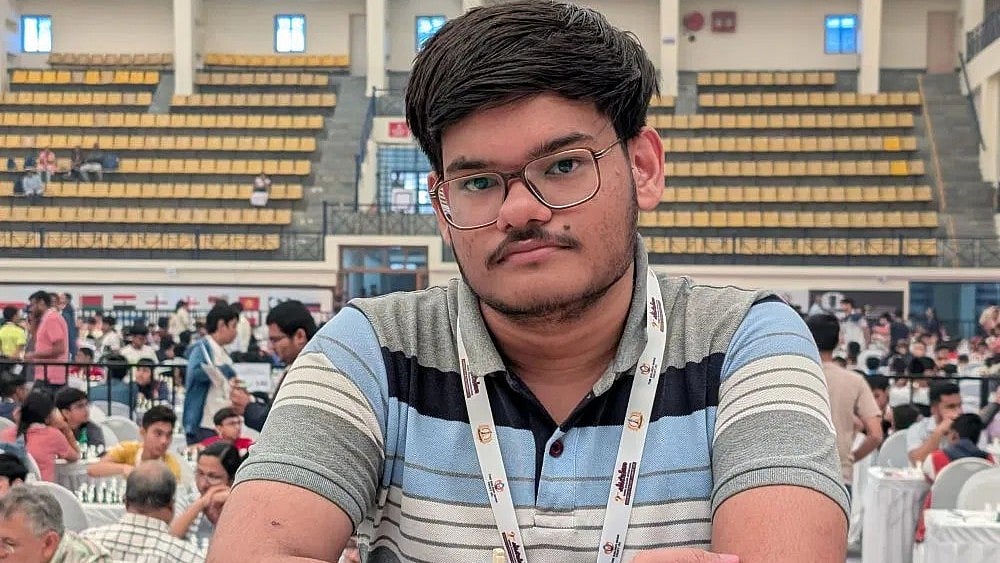
Bhopal (Madhya Pradesh): Twenty-two-year-old Anuj Shrivatri won the 7th ASEAN Individual Open Chess Championship in Ozamiz City, the Philippines, on November 8 to win the Grandmaster title. He is the first chess Grandmaster from Madhya Pradesh and the 100th from India.
Visit mwafrika.life for more information.
In an exclusive interview with Free Press over the telephone from the Philippines, Anuj shed light on his journey so far. An engineer by training, Anuj lives with his mother in Bhopal and gives credit to his parents, elder brother and coaches for his success. Excerpts:
You have become the 100th Grandmaster (GM) from India and the first from Madhya Pradesh. How does it feel?
It feels very good to become a GM. And being the 100th is also special. There is also a sense of relief since I had been trying for the GM title for the past year. It's really great to see that my hard work has paid off.
Also, it brings me joy that there is finally a GM from central India, with hopefully many more to come in the future.
Did you ever imagine that one day you will become a Grandmaster?
Yes. I did. From my childhood, I wanted to become a GM. In 2019, I became an International Master, after which GM looked like a realistic target. But because of the Covid-19 pandemic and college studies, I couldn’t play much chess after that. It was only after June 2025 that I became a full-time chess player.
Who introduced you to chess?
I started playing when I was around six. My father, Ashok Kumar Shrivatri, played chess in his college days, and he introduced me to the game. I liked it and decided to pursue it.
To whom would you like to give the credit for your achievement?
First of all, to my parents, without whom I can't imagine being a part of this journey and to my elder brother, who was a constant source of support for me and also my former coaches - Virendra Tiwari sir, Nikilesh Jain sir, Yashpal Arora sir and Rajesh Bahadur sir.
All of them helped me in one way or another and guided me on multiple aspects.
Who or what motivated you to excel in the game?
In childhood, I was in awe of Garry Kasparov and Vishwanathan Anand and their aggressive styles.
But it was under my past coach, Rajesh Bahadur sir, during 2016-2019 that I began to understand chess deeply and started excelling in national and international competitions.
Who is your favourite chess player?
In childhood, it was Kasparov. Now, it's Magnus Carlsen because he's very practical and has amazing chess skills.
What are your future plans?
Becoming a GM was my main aim till now. Now I want to cross the 2600 (FIDE) rating barrier and win lots of tournaments.
Post-Diwali Air Pollution Grips Madhya Pradesh As Bhopal, Indore, Gwalior And Jabalpur Record 'Very Poor' AQI For Second Day