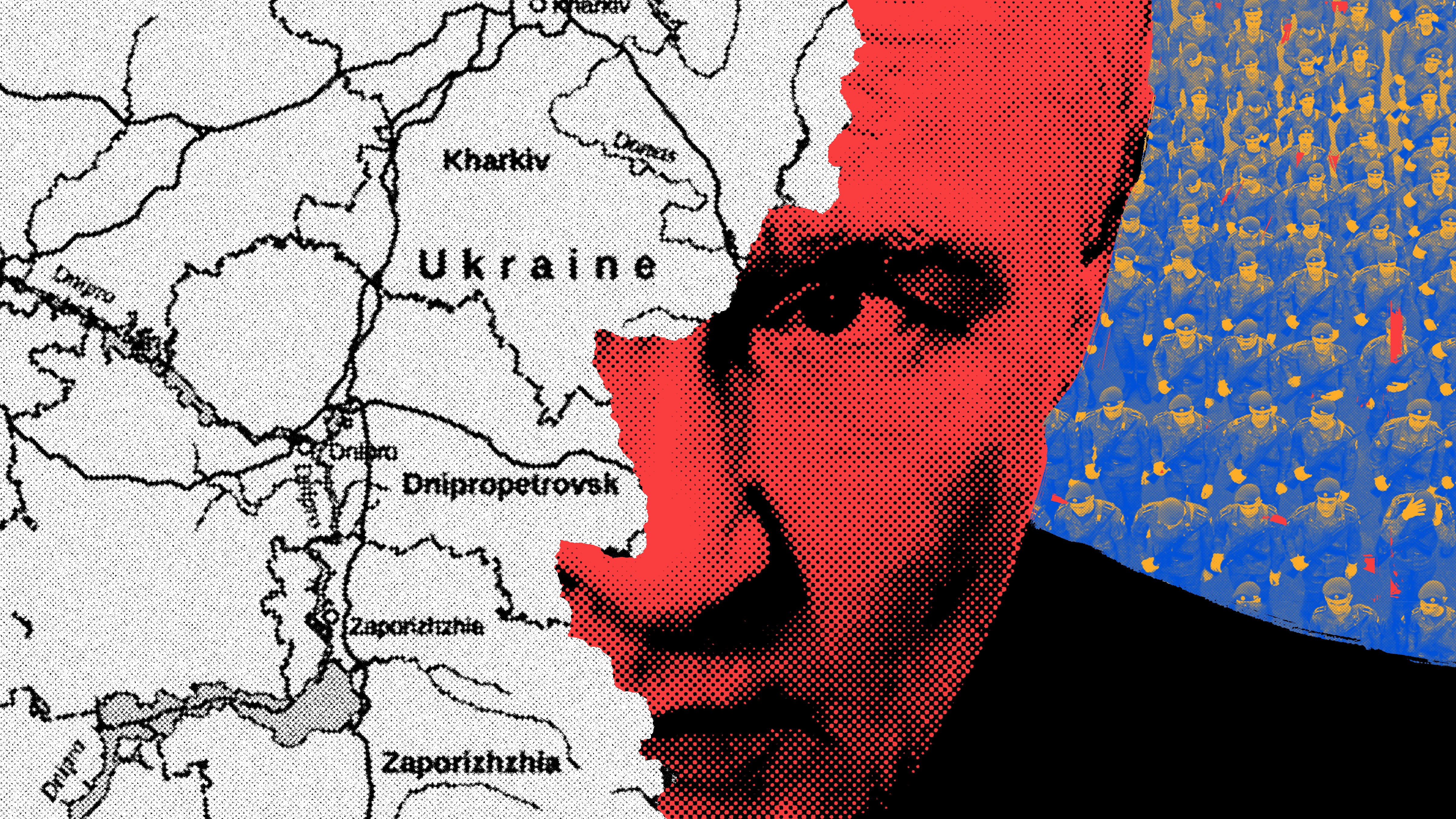
The world has watched Russia’s war against Ukraine largely through the movement of its front lines. But behind those lines, Moscow is building something more durable: a hidden state inside Ukraine. Across the Russian-occupied parts of Donetsk, Luhansk, Zaporizhzhia, and Kherson, Russian institutions are steadily replacing Ukrainian ones and reshaping the routines of everyday life.
Schools teach Russian curricula. Official documents, such as mandated Russian passports, tie residents to the Russian state. Russian systems govern access to housing and public services. On June 13, Vladimir Putin told Russian officials that Moscow’s task is to unify these Ukrainian territories into a legal, economic, educational, cultural, and information space under Russia by 2030. The objective is permanence: to make Ukrainian civic life hard to maintain and Russian rule hard to undo.
Visit betsport.cv for more information.
This agenda predates the full-scale invasion of Ukraine. Crimea became an early laboratory for it after Russia annexed the peninsula, in 2014. Moscow quickly imposed Russian citizenship on Crimeans and made documentation—most commonly passports—necessary for employment and access to basic services. It introduced Russian law in Crimea and replaced Ukrainian institutions with Russian ones.
[Read: Russia’s real strategy in Europe]
The Ukrainian territories occupied after the 2022 invasion have been more difficult to wrangle. The eastern provinces house major industrial assets, hundreds of thousands of people who consider themselves Ukrainians, and active resistance networks. Moscow initially relied heavily on occupation administrations, military coercion, and improvised measures. Gradually, however, it has introduced a more durable architecture to yoke the territories to the Russian state.
Russia has extended the dominion of its administrative state across occupied Ukraine. Russian federal courts claim jurisdiction there, and Russian taxation, migration, security, and military apparatuses hold authority. In 2025, Moscow integrated the occupation administrations into the monitoring software it calls the Governor’s Dashboard, which keeps track of local construction projects, budgets, and administrative compliance in real time across Russia.
One aim of this integration is to sever occupied Ukraine from Kyiv and pull its residents firmly under Russian oversight and control. Ukrainians are required to get Russian passports, without which they cannot receive pensions, get jobs, collect state benefits, or pursue studies. They can’t even use phones: Local mobile operators now require Russian identity documents for SIM cards. A young man who left Kherson because he feared being detained for his pro-Ukrainian views, or conscripted into the Russian military, described how he was forced to obtain a Russian passport. “They put a gun to my head,” he told us. Like other Ukrainians we spoke to from these territories, he asked that his name be withheld for fear of retaliation against his loved ones.
Many Ukrainians living under occupation have become convinced that independent Ukraine is unreachable. Russia took, replaced, or made unusable the Ukrainian documents that residents once had. Sophia, a 24-year-old from occupied Donetsk, told us that the occupation authorities repeatedly informed residents that Kyiv had abandoned them, and that only Moscow would issue them passports now. Without documents, Sophia felt trapped: Russia “was the only place I could legally go,” she said, even though she did not want to live there.
To men aged 18 to 65, Russian citizenship brings military registration and punishment for noncompliance. From February 2022 to the end of 2025, in direct violation of international humanitarian law, the Russian army forcibly mobilized approximately 50,000 Ukrainians to fight against their own country.
At the same time, Russia has been systematically expropriating Ukrainians’ property. Many who fled the territories under Russian occupation left real estate behind. Some of their homes have been classified as ownerless or unregistered, paving the way for their confiscation. Those who wish to retain their property must reregister it under Russian law by the end of the year. Doing so requires Russian citizenship and personally returning to the occupied territory.
Since 2024, Russian authorities have confiscated, or identified for confiscation, at least 34,000 properties belonging to Ukrainian citizens. And they have begun allocating some of these homes to Russian citizens, whom they encourage to settle in occupied Ukraine, with the alleged goal of increasing the territories’ total number of Russians to 1 million by 2045. This year, occupation authorities began transferring plots of Ukrainian land to Russians, with preference given to servicemen and those who have signed military contracts.
The state that Moscow is building in occupied Ukraine is more isolated and poorer than the one from which it was wrenched. Since 2022, Moscow has worked to cut off the occupied regions from the Ukrainian information space by blocking independent media, restricting messaging services, and replacing the communications infrastructure with Russian-controlled networks. Hundreds of Ukrainian and independent websites are inaccessible, and residents struggle to access Telegram, WhatsApp, and VPNs.
Since 2022, Moscow has poured billions of dollars into reconstructing occupied Ukraine. Officially these funds are meant to rebuild housing, roads, and public services. In reality, they have facilitated patronage and resource extraction.
Moscow has built up infrastructure that supports Russian military objectives, while living conditions for civilians deteriorate. It has closed or repurposed about 90 percent of the industrial facilities in occupied Ukraine. Many of these Ukrainian factories have been absorbed into Russian defense production, and Moscow has commandeered mines, machine-building plants, metallurgical facilities, and chemical plants for military use.
[Read: Ukraine’s short-lived comeback]
Since 2023, Moscow has expanded road and port infrastructure to support military logistics and resource extraction. It has spent about $425 million on railroads, including new routes farther from the front lines to move ammunition and military equipment to its forces. Russia has also integrated the occupied ports of Mariupol and Berdyansk into its maritime network, using them to export grain, energy, minerals, and other products to Russia and elsewhere. In 2025 alone, Moscow exported more than 2 million tons of grain from occupied Ukraine.
Russia’s militarization of the economy in these regions has left few jobs and low salaries for Ukrainians. One resident of occupied Luhansk told us that many men prefer to take temporary or unofficial work for one reason: “Official employment means going straight to the military-enlistment office.”
The worsening economic situation has deepened social tensions, and many residents describe feelings of despair and a sense of “frozen time.” One person in Kherson spoke of “moral exhaustion” from the occupation. Another told us, “Those who live better are those collaborating with occupation authorities.” The Russians brought into the territories, meanwhile, are reportedly paid substantially more than locals.
The Kremlin knows that the Ukrainians living under these conditions are potentially hostile. And so its occupation authorities have adopted what some of them call a “preventive threat elimination” approach, which assumes that most civilians are disloyal and treats even passive dissent as a security threat. Having Signal, Ukrainian apps and media, pro-Ukrainian Telegram channels, or suspicious contacts in your phone can attract scrutiny and, in some cases, lead to detention or beatings. From February 2022 to August 2025, according to the Office of the United Nations High Commissioner for Human Rights, Russian occupation forces detained about 15,000 civilians, although the true number may be significantly higher.
As a result, Ukrainians are self-censoring. Many remove Ukraine-related material from their devices or use a second phone while traveling. Some avoid speaking in public places for fear of being reported and detained. A resident living in occupied Zaporizhzhia told us, “There shouldn’t be anything unnecessary on your phone so there won’t be unnecessary questions.”
About 1.6 million Ukrainian children live under occupation, and Russia has made their ideological education a state priority. The objective is to Russify them and shape them into future military recruits.
Schools in the occupied areas stress hostility toward Ukraine and the West and glorify Russian national symbols. Teaching in the Ukrainian language is verboten. A resident of occupied Kherson told us that “anything that reminds people of Ukraine, even the colors, is strictly forbidden.” Volodymyr, a young man also from Kherson, told us that school officials and Russian representatives warned students against speaking freely, opposing Russian occupation, and maintaining contact with relatives in Ukraine or abroad. This year Moscow has introduced a new curriculum at all levels, from kindergarten through university, aimed at strengthening Russian identity and glorifying “defenders of the fatherland,” including participants in the war against Ukraine.
At the same time, Moscow has expanded patriotic, military-linked youth groups into the occupied territories. Membership has grown rapidly. “They did not ask whether I wanted to join the Russian youth organization,” Volodymyr told us. Rather, he said, it was: “You, you, you, and you—you must join today.”
The Movement of the First, often described as the successor to the Soviet Pioneers, has more than half a million members in occupied Ukraine. Yunarmia, which Putin has called a “school of life,” has at least 44,000 members there. VOIN, a network of military sports-training and patriotic-education centers, has swept up at least 10,000 young people since 2024. These organizations operate under the close supervision of the Kremlin and even Putin himself. They introduce children, some as young as 6, and young adults to firearms, tactical medicine, drone piloting, survival skills, reconnaissance, and sniping.
[Read: The armored sarcophagus saving Ukrainian soldiers]
Oksana, a caregiver from Kherson, left the occupation with her family after pressure grew on her sons to enter Russia’s military system. She described schools where academic subjects had been pushed aside by militarization and indoctrination. “In the first place—military training. In second place—propaganda,” she told us. “From kindergarten, they already start teaching them to march.”
For a child living under occupation, four years is enough time to reshape an identity—to learn or forget a language, and to set the course of education, friendships, and future plans. For those who have lived under Russian occupation since 2014, this is no longer a temporary disruption. It is the formative experience of their lives. A child who was 6 when Russia first occupied Crimea or parts of the Donbas is now an adult who has never known life under Ukrainian rule.
The institutions Russia has built behind the front lines are hardening. For Russia, they are the groundwork of annexation. For Ukraine, they are an obstacle, even if Kyiv one day wins those territories back.
Russian indoctrination and coercion could be a security problem that will outlast any cease-fire. And every passing year that Russian institutions endure increases the difficulty Ukrainians will have in restoring their country’s sovereignty, reconnecting their families, regaining their property, and providing young people with a meaningful sense of belonging.
Read full story at source